
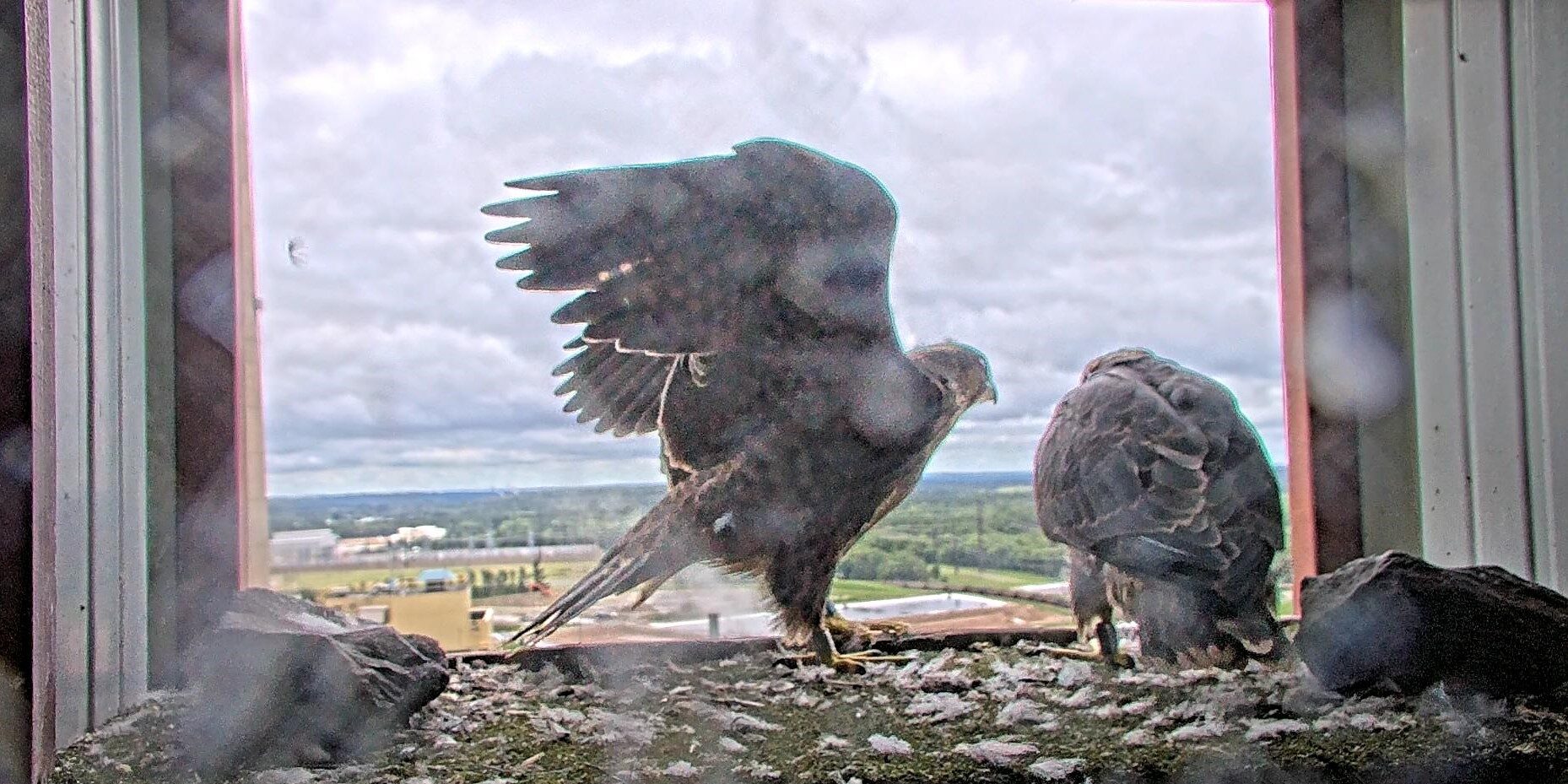
Three of the peregrine falcons born at Wisconsin Public Service (WPS) and We Energies power plants this spring have already traveled thousands of miles since they left the nest in June — giving researchers an unprecedented look at where the endangered birds go after they take flight.
The groundbreaking data comes from tiny location transmitters placed on the falcons when they were chicks. The technology is providing a first-of-its-kind, detailed look at the movements of young peregrines.
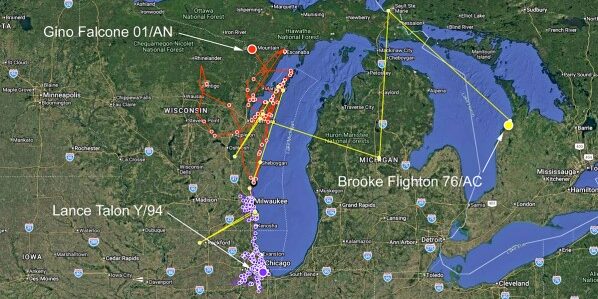
Where are they now?
- Gino Falcone headed north from his birthplace in Port Washington, making stops in Door County, northern Wisconsin and Michigan’s Upper Peninsula. He was most recently pinged in Norway, Michigan.
- Brooke Flighton made her first trek from her birthplace in Oak Creek to Winnebago, Illinois, before heading north into Door County, over to Clare, Michigan, and up to Sault Ste. Marie before being pinged most recently in Port Elgin, Ontario.
- Lance Talon departed his birthplace in Milwaukee and went south to Illinois with stops in Des Plaines, Joliet and a day trip to Navy Pier in Chicago. He has most recently been pinged at the McCook Quarry in McCook, Illinois, where he seems to have made himself a home.
Where did the Weston Power Plant peregrine falcons go?
BlūMorpho tags also were attached to Featherson Lehmann, Jade Eggshell, Kyle Prey-zorski and Matt Tweet, the peregrine falcon chicks born at the Weston Power Plant near Wausau this spring. The transmitters recorded the chicks soaring around the plant for their first flights, but unknown issues caused them to stop working only a few days later.
Featherson Lehmann’s transmitter was the last to connect to the tracking system on July 4, when she was at the Weston Power Plant. While issues with the new technology were not unexpected, the three transmitters that continue working are providing welcome insights into the early months of a young peregrine falcon’s life.
“This is only the second time these transmitters have been used on peregrine falcons in the United States,” said Greg Septon, peregrine falcon manager. “The data we have been able to collect is nothing short of incredible, and we are working with the vendor to make improvements to the transmitters for the falcon chicks born next year.”
What comes next?
Septon will continue to review the data that comes in from each of the working transmitters. The goal is to develop a clearer understanding of where young falcons go in their first years of life before they settle at a nest site to lay eggs and raise their own young.
As for the falcons that do not have working transmitters, there is always a chance that they will be spotted in the wild or even photographed by birders.
About the peregrine falcon program
Peregrine falcons almost went extinct in Wisconsin due to the extensive use of pesticides following World War II. To support the species’ recovery, WPS and We Energies began installing peregrine falcon nest boxes at power plants in the early 1990s.
Since then, 476 peregrine falcons have been named and banded at company facilities — representing 20% of all peregrine falcons hatched in the state. This program is just one way WPS and We Energies are building a bright, sustainable future.