
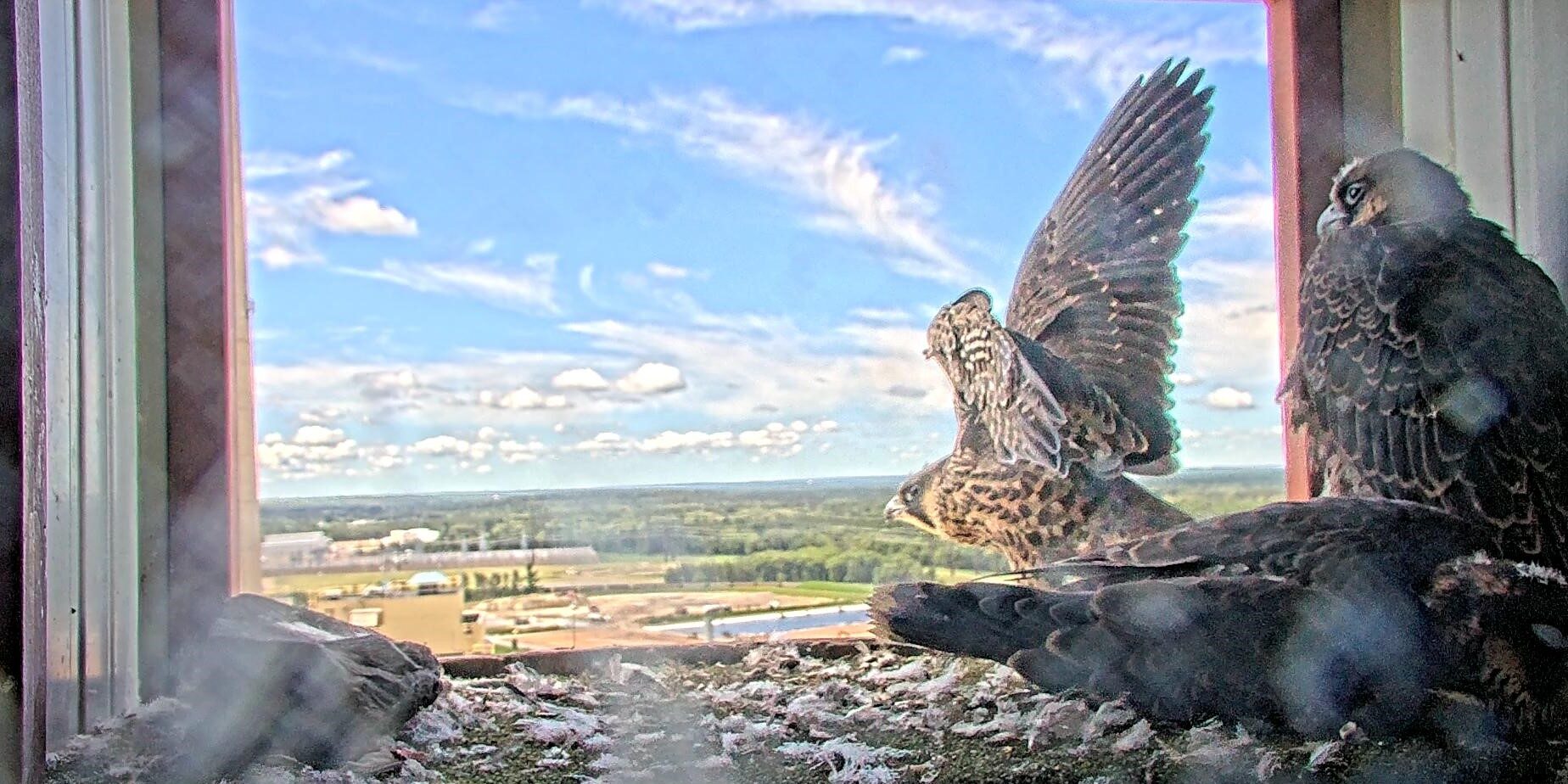
The peregrine falcons at Wisconsin Public Service’s (WPS) Weston Power Plant are spreading their wings into the skies above central Wisconsin. Each of this year’s chicks — “Kyle Prey-zorski,” “Matt Tweet,” “Featherson Lehmann” and “Jade Eggshell” — have left the nest box after taking their first flights.
This year’s peregrine falcons have names inspired by local news anchors from northeast and north central Wisconsin. They were named in honor of Kyle Pozorski (formerly of WAOW-TV), Matt Z (WTAQ-FM), Emerson Lehmann (WBAY-TV) and Jade Henschel (formerly of WFRV-TV).
“Kyle Prey-zorski” was the first to fly, followed by “Matt Tweet” two days later. “Featherson Lehmann” and “Jade Eggshell” both chose Sunday morning as their day to take to the skies.
Falcons provide memorable send off
The footage of each falcon’s first flight is as unique as their names. “Kyle Prey-zorski” soars confidently with his siblings cheering him on. “Matt Tweet” misjudges his takeoff but gets some encouragement as he glides for the first time. “Jade Eggshell” waits for her close-up before flying like a natural. And “Featherson Lehmann” leaves everyone in suspense, waiting until she is off camera to sneak away into the skies.
Each of this year’s chicks will spend the next month mastering their flying skills and learning how to hunt for food near the Weston Power Plant. They will then head off in different directions to start their own lives.
New tracking technology
While the nest box is empty, it’s only the beginning of the story for this year’s falcon chicks. Earlier this month, WPS attached BlūMorpho tracking tags to each falcon.
The solar-powered location tags will give experts and researchers unprecedented data on where young falcons travel to in their first year of life. This is the first time WPS has used the technology, and only the second time it has been used with peregrine falcons in the United States.
With each falcon now reporting on their new view from above, it marks the end of another successful peregrine falcon nesting season.
About the peregrine falcon program
Peregrine falcons almost went extinct in Wisconsin due to the extensive use of pesticides following World War II. To support the species’ recovery, WPS and We Energies began installing peregrine falcon nest boxes at power plants in the early 1990s. Since then, 476 peregrine falcons have been named and banded at company facilities — representing 20% of all peregrine falcons born in the state.
This program is just one way WPS and We Energies are building a bright, sustainable future.